How to care for it
Five things keep a community aquascape thriving.
Water: change a little, weekly
Change about 20-30% once a week. Treat the new tap water with anti-chlorine first (chlorine harms fish and the good bacteria in your filter), and match the temperature roughly by feel. Slow and steady beats big and sudden.
Filter: always on, rinsed gently
Leave the filter running 24/7: the media inside houses the bacteria that keep the water safe. If flow drops, rinse the media in old tank water during a water change, never under the tap, and never all of it at once.
Light: enough for plants, not algae
6-8 hours a day on a timer, and keep the tank out of direct sun. If algae creeps in, shorten the light hours before you change anything else.
Feeding: once a day, two minutes
Feed once a day, only what the fish finish in about two minutes. Skipping a day does no harm. Overfeeding is the fastest way to foul the water: leftover food rots invisibly.
Plants: trim, and remove the dying
Trim stems when they reach the surface and remove yellowing leaves before they decay. If you dose fertiliser, follow the bottle, not instinct: more is not faster.
What's normal at first
A new system is settling in, so don't worry if you see:
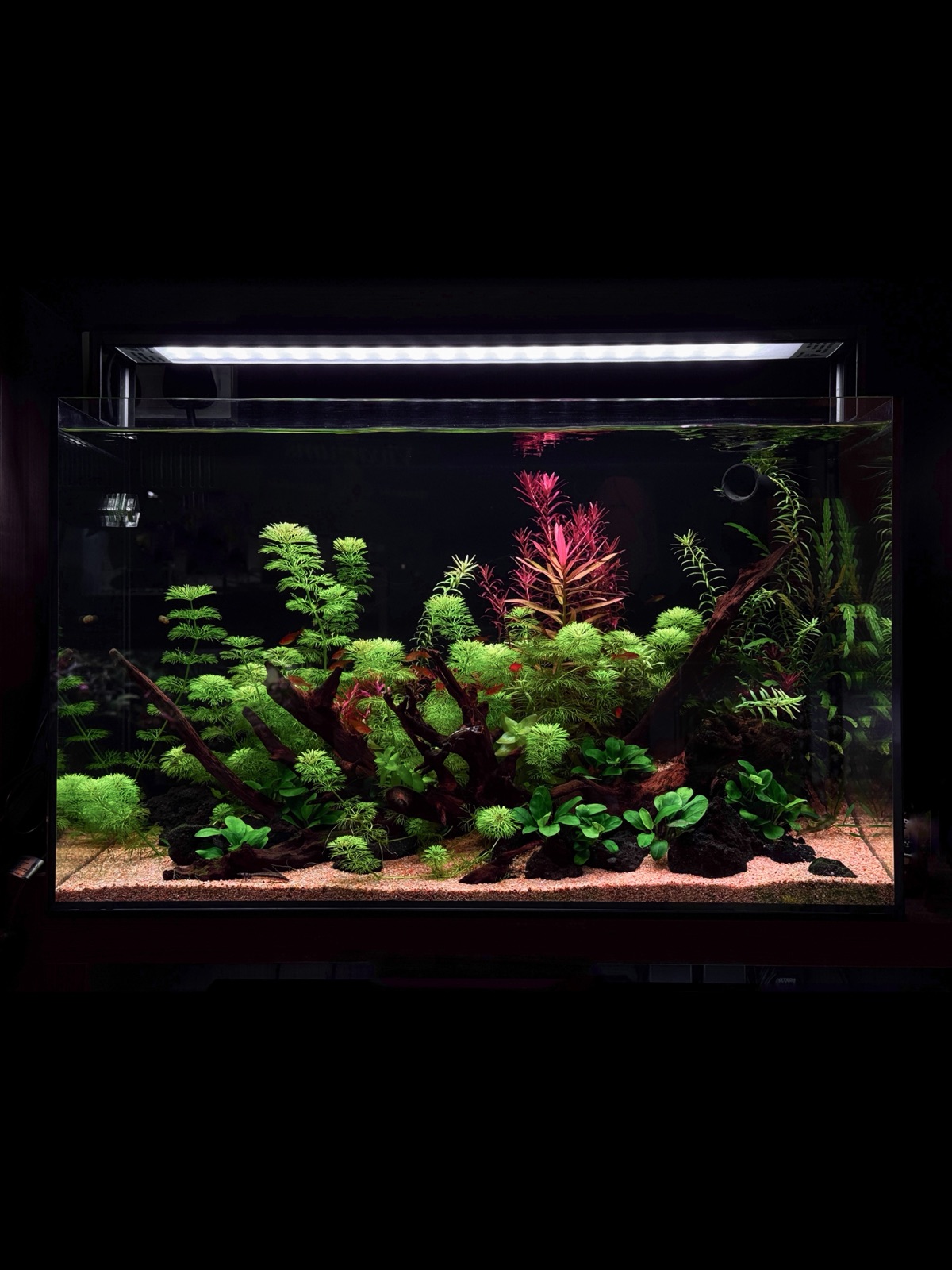
Frequent problems you might face
Fish gasping near the surface after a water change: almost always untreated or mismatched water. Always add anti-chlorine, keep changes to 20-30%, and go slower.
Algae on the glass or plants: cut the light hours back and feed less. Wipe the glass during the weekly change.
Filter noise or weak flow: usually a low water level or a clog. Top up, clear the intake, rinse the media in tank water.
Water smells or stays cloudy: overfeeding until proven otherwise. Cut back, remove leftovers, do a small change.
A fish looking pale, clamped or thin: message us a photo early. Most fish problems are cheap to fix at the start and expensive a week later.
Good to know
When can fish go in?+
2-4 weeks after setup: a new system needs to mature first (the filter bacteria have to establish before fish are safe). We bring the fish along on a maintenance visit and settle them in. See the add-ons on the Stream page.
Can I add more fish later?+
The stocking is sized to the tank, so ask us before adding. More fish means more waste than the filter was sized for, and some species do not mix.
What about holidays?+
Healthy adult fish are fine unfed over a long weekend. For longer trips, ask us about a holiday visit rather than a food block: food blocks foul the water.
Do I need CO2?+
No. The recipe is built to run without it. A CO2 set (available as an add-on) grows the plants denser and faster, but it is a want, not a need.
Where should the tank sit?+
On a level surface that takes the weight, out of direct sun, with a power point in reach. Not sure about a spot? WhatsApp us a photo.